
Murchison Falls National Park: Complete Guide to Uganda’s Wildlife, Nile Safaris & Murchison Falls
Murchison Falls National Park: An Introduction
Murchison Falls National Park is one of Uganda’s most spectacular wildlife destinations and one of the best places to experience a classic African safari in the Pearl of Africa. Located in northwestern Uganda, the park is famous for the dramatic Murchison Falls, where the Victoria Nile is forced through a narrow gorge before plunging into the river below.
But the waterfall is only one part of the attraction. Murchison Falls National Park combines expansive savannah plains, woodland, wetlands, riverine habitats and the Nile itself to create an exceptionally diverse safari environment. Visitors can enjoy game drives, Nile boat safaris, hiking to the top of the falls, bird watching, sport fishing, nature experiences and cultural encounters.
The park is Uganda’s largest national park, covering about 3,893 square kilometres. The wider Murchison Falls Conservation Area also includes Bugungu Wildlife Reserve and Karuma Wildlife Reserve, while Budongo Forest lies immediately to the south. The Victoria Nile bisects the protected landscape and is the ecological centerpiece of the region.
For travelers planning Uganda safaris, Murchison Falls is especially valuable because it combines dramatic scenery with strong opportunities to see large mammals. Lions, elephants, buffaloes, giraffes and Uganda kob are among the animals commonly associated with the park, while the Nile supports hippos, crocodiles and abundant waterbirds.
A Murchison Falls safari can also be combined with other major Ugandan destinations such as Ziwa Rhino Sanctuary, Kibale Forest National Park, Queen Elizabeth National Park, Bwindi Impenetrable National Park and Kidepo Valley National Park.
Where Is Murchison Falls National Park?
Murchison Falls National Park is located in northwestern Uganda, with the protected area extending across several districts including Masindi, Buliisa, Nwoya and Kiryandongo. The park lies at the northern end of the Albertine Rift landscape and is connected ecologically with surrounding wildlife reserves and forest habitats.
From Kampala, Murchison Falls is one of Uganda’s more accessible major safari destinations by road. The Uganda Wildlife Authority conservation tariff map places Murchison Falls at approximately 305 kilometres from Kampala, although the actual travel distance and journey time depend on the route and park gate.
Many safari itineraries approach the park through Masindi and use one of several entry points. The best gate depends on your accommodation, itinerary and whether you are exploring the northern or southern side of the park.
Because Murchison Falls is very large, accommodation location matters. A lodge close to the Paraa area can make it easier to reach the main game-drive circuits and Nile launch point. Travelers staying farther away should allow additional driving time.
Why Is Murchison Falls National Park Famous?
Murchison Falls National Park is famous for three major reasons: the spectacular Murchison Falls, the wildlife-rich savannah and the Nile River safari experience.
The waterfall is the park’s namesake attraction. At the falls, the Nile is compressed into a gorge only about seven metres wide before plunging approximately 43 metres. The force of the water creates a dramatic spectacle of spray, noise and rainbows.
The park is also one of Uganda’s best destinations for traditional savannah wildlife viewing. Open grasslands and woodland provide habitat for elephants, giraffes, buffaloes, lions, Uganda kob and numerous antelope species.
Finally, the Nile provides a safari experience that is difficult to reproduce elsewhere. A boat cruise from the Paraa area allows visitors to observe hippos, crocodiles, elephants coming to drink, buffaloes along the shoreline and large numbers of birds while travelling toward the base of Murchison Falls.
This combination of waterfall, river and savannah makes Murchison Falls one of the most complete Uganda safari destinations.
The Murchison Falls: Uganda’s Most Powerful Waterfall Experience
Murchison Falls is the geographical and visual centerpiece of the national park. The Victoria Nile approaches the waterfall before being forced through a narrow rock gorge. The water then drops dramatically into a powerful pool below.
The narrowness of the gorge is what makes the waterfall so impressive. Instead of spreading across a broad cliff, the river is concentrated into a restricted channel, producing tremendous force.
Visitors can experience the falls from different viewpoints. The classic boat safari approaches the bottom of the falls from downstream, allowing visitors to see the water and surrounding cliffs from the Nile. A hike or vehicle excursion to the top of Murchison Falls provides another perspective, where travelers can stand close to the point at which the river is squeezed into the gorge.
For photographers, the falls are particularly attractive in bright conditions when spray and sunlight can create rainbows. However, the power of the water remains impressive in cloudy weather as well.
The waterfall is not simply a scenic attraction; it is also the feature that gives the entire national park its identity and provides one of the most memorable experiences on a Murchison Falls safari.
Wildlife in Murchison Falls National Park
Murchison Falls National Park is one of Uganda’s strongest destinations for large-mammal viewing. The northern sector, in particular, contains extensive savannah and woodland that support substantial populations of herbivores and predators.
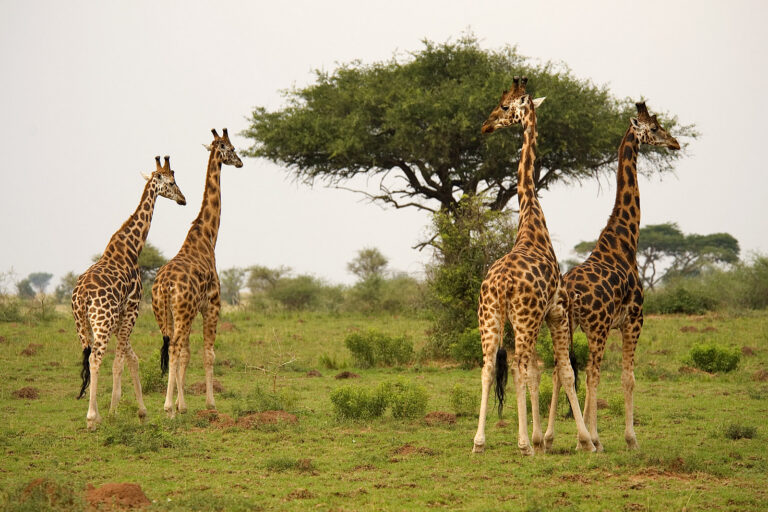
Commonly sought animals include African elephants, Rothschild’s giraffes, buffaloes, Uganda kob, hartebeest and other antelope. Lions are among the park’s major predators, while leopards are present but more elusive.
The park is also known for its Nile wildlife. Hippos can be seen in large numbers around suitable sections of the river, while Nile crocodiles often rest on sandbanks and riverbanks.
The Uganda Wildlife Authority has described Murchison Falls as supporting more than 76 mammal species and more than 450 bird species. Other tourism sources provide slightly different species totals depending on whether they refer to the national park alone or the wider conservation area, so visitors should treat species counts as approximate.
Wildlife sightings are never guaranteed. The best strategy is to combine early morning and late afternoon game drives with a Nile boat safari, giving yourself multiple opportunities to encounter different species and behaviors.
The Big Five in Murchison Falls National Park
Murchison Falls can be a rewarding destination for travelers interested in the African Big Five: lion, leopard, elephant, buffalo and rhinoceros.
Elephants and buffaloes are relatively prominent safari animals in the park. Lions are also an important attraction, particularly on the northern savannah plains. Leopards are present but are considerably harder to find because of their secretive behavior and lower visibility.
Rhinoceros are not normally encountered inside Murchison Falls National Park itself. Travelers who specifically want to add rhino tracking to a Murchison Falls safari can consider visiting Ziwa Rhino Sanctuary on a route between Kampala and Murchison Falls, subject to current conservation and tourism arrangements.
This makes it possible to create a broader Uganda safari focused on the traditional Big Five while also including the waterfall and Nile experience that make Murchison Falls unique.
Game Drives in Murchison Falls National Park
Game drives are one of the best things to do in Murchison Falls National Park. The northern sector offers broad savannah landscapes where wildlife can often be easier to spot than in dense forest environments.
Early morning game drives are especially valuable because many animals are active before the heat of the day becomes intense. This is also a productive time for predators and photographers who want softer light.
Afternoon game drives can be equally rewarding, particularly as temperatures begin to fall and animals become more active. A full-day game drive can allow visitors to cover more ground, although the ideal approach depends on your itinerary and interests.
During a game drive, keep an eye on both the open plains and woodland edges. Giraffes may appear against the horizon, elephants can emerge from thicker vegetation, and Uganda kob may gather in open grassland. Lions may be resting beneath trees during hot periods.
A knowledgeable safari guide is extremely valuable. Experienced guides understand animal behavior, recognize tracks and calls and communicate with other guides about wildlife sightings.
Nile Boat Safari in Murchison Falls
The Nile boat safari is arguably the second signature experience of Murchison Falls National Park after the waterfall itself. The most popular launch trip travels upstream from Paraa toward the base of Murchison Falls.
From the boat, visitors can watch hippos partially submerged in the river, Nile crocodiles resting along the banks and elephants approaching the water to drink. Buffaloes and other mammals may also be visible along the shoreline.
The boat trip is particularly good for photography because the river provides a natural approach to animals that are difficult to observe from a vehicle. It is also an excellent birding activity.
The cruise culminates near the bottom of Murchison Falls, where the roar of the water becomes increasingly powerful. The experience combines wildlife viewing, scenery and the geological drama of the waterfall.
Depending on current operating schedules, travelers may also be interested in alternative Nile cruises, including birding-focused trips toward the Nile-Lake Albert Delta or sunset cruises. Always confirm current departure times with your safari operator or Uganda Wildlife Authority.
Hiking to the Top of Murchison Falls
A visit to Murchison Falls is incomplete for many travelers without seeing the waterfall from above. The top-of-the-falls experience allows visitors to observe the Nile as it approaches the narrow gorge and is compressed into a powerful torrent.
The viewpoint provides a completely different perspective from the boat safari. At the bottom, the focus is on the waterfall plunging into the pool; at the top, the focus is on the enormous volume of water being forced through the gorge.
The area around the top of the falls can be wet from spray, so protect cameras and other electronics. Wear shoes with good grip and follow safety instructions from guides and park authorities.
For travelers who enjoy photography, the top of the falls provides excellent opportunities for wide landscape images and close-up photographs of the rushing water.
Bird Watching in Murchison Falls National Park
Murchison Falls National Park is a major birding destination in Uganda. More than 450 bird species have been recorded in the park and surrounding conservation landscape, making it attractive to both dedicated birders and casual wildlife travelers.
The park’s varied habitats are responsible for much of this diversity. Savannah birds, woodland species, wetland birds and riverine species can all occur within the wider conservation area.
One of the most sought-after birds is the shoebill. The Nile-Lake Albert Delta and wetland habitats can provide opportunities to search for this extraordinary bird, although sightings are never guaranteed.
Birding can be incorporated into game drives, boat cruises and specialist forest or wetland excursions. Early mornings are particularly productive because birds are generally more vocal and active.
If birding is a major priority, consider adding a specialist bird guide and allowing extra time. Murchison Falls can also be combined with Budongo Forest, which expands the range of forest species available to the itinerary.
The Shoebill in Murchison Falls
The shoebill is one of the most famous birding targets in Uganda, and Murchison Falls National Park and its surrounding wetlands are among the places where birders can search for it.
This large, prehistoric-looking bird is particularly associated with papyrus and wetland habitats. Its enormous bill, tall stature and patient hunting behavior make it one of Africa’s most memorable birds.
Shoebill sightings require patience. Even in a known habitat, the bird can remain hidden among vegetation. A specialist local guide can improve your chances by knowing appropriate wetlands, seasonal conditions and bird calls.
Travelers interested specifically in the shoebill should consider planning a dedicated birding excursion rather than relying only on a standard game drive.
Fishing in Murchison Falls National Park
Sport fishing is another activity associated with the Nile in Murchison Falls. The river contains Nile perch and other fish species, and fishing trips can provide a very different way of experiencing the river.
Fishing is generally focused around designated areas and must follow park regulations. Anglers should arrange permits, guides and equipment through authorized channels.
The most famous fishing target is the Nile perch, a powerful freshwater fish that can reach very large sizes. Catch-and-release practices and responsible handling are important for protecting the river ecosystem.
Fishing is best suited to travelers who want to add a specialized activity to their safari rather than those following a tightly scheduled wildlife itinerary.
Murchison Falls and Budongo Forest
Budongo Forest lies south of Murchison Falls National Park and provides an excellent complement to the savannah and Nile environments. The forest is known for its biodiversity and primate experiences, including chimpanzee tracking opportunities under applicable tourism arrangements.
Combining Murchison Falls with Budongo creates a varied itinerary: savannah game drives in the park, a Nile boat safari, the waterfall and a forest experience.
This combination is particularly attractive to travelers who enjoy primates, birding and ecological diversity. Instead of spending every day on open plains, visitors can move from savannah into mature forest and experience a completely different habitat.
Budongo can also strengthen a birding itinerary because forest species differ substantially from the birds found on open savannah and river habitats.
Murchison Falls Conservation Area
Murchison Falls National Park forms the core of the larger Murchison Falls Conservation Area. The wider landscape includes Bugungu Wildlife Reserve and Karuma Wildlife Reserve, while Budongo Forest Reserve lies to the south.
The conservation area is important because wildlife does not recognize administrative boundaries. Animals move between habitats, and protecting connected landscapes can help maintain ecological processes.
The Victoria Nile is a major feature of this system. It crosses the protected landscape before continuing toward Lake Albert, creating riverine habitats, wetlands and water sources used by wildlife.
For safari travelers, understanding the wider conservation area helps explain why a Murchison Falls safari can offer such a diverse combination of forest, savannah, wetland and river experiences.
Best Time to Visit Murchison Falls National Park
Murchison Falls National Park can be visited throughout the year, but many travelers prefer the drier periods because wildlife can be easier to locate around water sources and roads may be more comfortable.
The dry seasons are commonly associated with strong game viewing conditions. Vegetation can be less dense, and animals may concentrate near permanent water.
The wetter months bring greener landscapes and can be rewarding for photographers and birders. Rain can also make some roads more challenging, so a flexible safari plan is useful.
If your primary goal is wildlife, consider traveling during a drier period. If you want fewer crowds, lush scenery and birding opportunities, wetter periods can also be attractive.
There is no universally perfect month. The best time to visit Murchison Falls depends on your priorities, budget, accommodation preferences and the rest of your Uganda safari itinerary.
Weather and Climate in Murchison Falls
Murchison Falls has a generally warm tropical climate, with temperatures influenced by altitude and seasonal rainfall. The park’s lower elevations and savannah environment can feel considerably warmer than Uganda’s highland destinations.
Daytime temperatures can be hot, especially during sunny periods. Early mornings and evenings are usually more comfortable, which is another reason early morning game drives are popular.
Rain can occur even outside the main rainy periods. Travelers should therefore carry light rain protection regardless of the season.
A good safari packing list includes lightweight breathable clothing, a hat, sunglasses, sunscreen, insect repellent, sturdy shoes, a light jacket and a waterproof cover for electronics.
How to Get to Murchison Falls National Park
Murchison Falls can be reached by road or air. Road travel is the most common option for travelers on overland Uganda safari itineraries.
Driving from Kampala allows visitors to experience rural Uganda and potentially stop at attractions along the way. A popular route passes through Masindi before entering the conservation area.
For travelers arriving at Entebbe International Airport, the safari can begin directly from the airport or after a night in Entebbe or Kampala.
Domestic or charter flights can provide a faster alternative for travelers with larger budgets or limited time. Depending on the operator and itinerary, flights may use airstrips serving the Murchison Falls area, followed by a lodge transfer.
The best transport option depends on your budget, number of travelers, itinerary length and whether you want to experience Uganda by road.
Murchison Falls Safari from Kampala
A Murchison Falls safari from Kampala can be organized as a short three-day trip or as part of a much longer Uganda safari.
A typical short safari may involve traveling to Murchison Falls on the first day, completing a game drive and Nile boat safari on the second day, and returning toward Kampala on the third day.
However, travelers who want a more relaxed experience should consider adding an extra night. This provides more flexibility for game drives, photography, birding and the waterfall.
For a broader itinerary, Murchison Falls can be combined with Ziwa Rhino Sanctuary, Kibale Forest, Queen Elizabeth National Park and Bwindi. This creates a safari covering rhinos, savannah wildlife, primates and mountain gorillas.
Murchison Falls Safari with Ziwa Rhino Sanctuary
Combining Ziwa Rhino Sanctuary with Murchison Falls is one of the most logical northern Uganda safari combinations. Ziwa provides an opportunity to learn about rhino conservation and track rhinoceros on foot, while Murchison Falls delivers the classic savannah and Nile safari experience.
This combination is particularly attractive to travelers interested in seeing a broader selection of Uganda’s large mammals.
A safari operator can arrange the route so that Ziwa is visited en route to Murchison Falls, reducing unnecessary backtracking.
Because conservation activities and access arrangements can change, confirm current visitor procedures before travel.
Murchison Falls and Kidepo Valley National Park
Murchison Falls and Kidepo Valley National Park can be combined for a longer northern Uganda safari. Both parks provide exceptional wildlife viewing but offer very different landscapes.
Murchison is defined by the Nile, waterfall and broad savannah, while Kidepo is characterized by remote valleys, rugged mountains and a distinctive northeastern ecosystem.
A combined itinerary is best suited to travelers with enough time to spend several days in each park. The distance between destinations makes this a substantial road journey, although flights can sometimes simplify logistics.
For photographers and serious safari enthusiasts, the combination can provide a much broader picture of Uganda’s wildlife diversity.
Murchison Falls and Queen Elizabeth National Park
Combining Murchison Falls with Queen Elizabeth National Park creates a strong classic Uganda safari. Both parks offer savannah game drives, but the scenery and wildlife experiences differ.
Murchison provides the Nile and its spectacular waterfall, while Queen Elizabeth offers the Kazinga Channel, crater landscapes and a wide variety of habitats.
The two parks can be connected in a longer itinerary that also includes Kibale Forest for chimpanzee trekking. Travelers with enough time can then continue south to Bwindi for mountain gorilla trekking.
This type of route is ideal for visitors who want to experience several of Uganda’s flagship safari landscapes rather than focusing on one park.
Where to Stay in Murchison Falls National Park
Murchison Falls accommodation ranges from budget camps and guesthouses to comfortable mid-range lodges and luxury safari properties.
When choosing a lodge, location should be one of your first considerations. A property near the main game-drive area and Paraa ferry can make it easier to reach both the northern savannah and the Nile launch point.
Consider the lodge’s distance from the park gate, road condition, meal arrangements, electricity, hot water, Wi-Fi, swimming pool availability and whether it can arrange early breakfasts or packed lunches.
Luxury lodges can provide river views, private cottages and premium safari services. Mid-range and budget properties can offer a more affordable way to spend additional nights in the park.
For wildlife photographers, a lodge close to the river can be especially appealing because it provides an opportunity to observe birds and other animals outside formal game drives.
Things to Do in Murchison Falls National Park
There is enough to do in Murchison Falls for several days. The major activities include game drives, Nile boat safaris, visiting the top of Murchison Falls, bird watching, fishing, nature walks and cultural experiences.
Game drives are the main activity for travelers seeking lions, elephants, giraffes, buffaloes and antelope.
The Nile boat cruise adds a completely different perspective, focusing on hippos, crocodiles, birds and animals along the shoreline.
The top-of-the-falls excursion focuses on scenery and the power of the Nile.
Birders can search for the shoebill and hundreds of other species, while anglers can arrange specialized fishing trips.
Travelers interested in local culture can explore community experiences around the park, ideally through responsible community-led tourism projects.
A well-planned itinerary combines several activities rather than repeating the same experience every day.
Murchison Falls for Families
Murchison Falls can be a rewarding family safari destination because it combines relatively accessible game viewing with a dramatic waterfall and boat cruise.
Children often enjoy the variety: elephants on a game drive, hippos on the Nile, crocodiles along the river and the roar of the falls.
Families should choose accommodation carefully and communicate children’s ages to their safari operator. Some lodges have specific policies concerning young children, game drives and activities.
A private safari vehicle can provide greater flexibility for families because stops, departure times and the pace of the game drive can be adjusted.
Families should also emphasize wildlife safety. Children should remain inside the safari vehicle unless the guide or park authority specifically permits them to leave.
Murchison Falls for Honeymooners and Couples
Murchison Falls can also work beautifully as a romantic Uganda safari destination. Couples can combine game drives with a private or shared Nile cruise, sunset experiences and a comfortable lodge overlooking the river or savannah.
The park’s scenery provides excellent opportunities for photography and quiet moments away from major urban centers.
For honeymoon itineraries, consider adding Murchison Falls to a longer route that includes Kibale, Queen Elizabeth, Bwindi and Lake Bunyonyi. This allows couples to experience wildlife, primates, gorilla trekking, rainforest and scenic lakes in one trip.
A private vehicle and carefully selected lodge can make the experience more intimate and flexible.
Responsible Tourism and Conservation in Murchison Falls
Tourism is an important part of conservation in Murchison Falls National Park. Park fees and tourism activities contribute to the management of protected areas, while tourism creates jobs and markets for local services.
Responsible visitors should follow park rules, maintain safe distances from wildlife, avoid feeding animals, remain on designated routes and listen carefully to guides and rangers.
Murchison also faces complex conservation pressures. The region has become strategically important to Uganda’s oil and gas sector, creating an ongoing discussion about balancing economic development, wildlife conservation and environmental protection. In July 2026, the Associated Press reported on the relocation of 12 endangered Nubian giraffes from Murchison Falls to Ajai Wildlife Reserve as part of a conservation initiative linked to habitat pressures in the wider region. citeturn0news43
These issues make responsible tourism particularly important. Visitors can support conservation by using legitimate operators, respecting protected-area rules and contributing to communities that depend on sustainable tourism.
Is Murchison Falls National Park Safe for Tourists?
Murchison Falls is a major established safari destination, and visitors normally explore the park with professional guides or drivers and within Uganda Wildlife Authority regulations.
The most important safety rule is to treat all wildlife as wild. Do not approach animals on foot unless a ranger or guide has explicitly authorized it. Never leave a vehicle near large animals without professional guidance.
On the Nile, follow boat safety instructions and remain seated or in designated areas. Crocodiles and hippos are powerful wild animals and should never be approached independently.
Road conditions can vary, especially during rainy periods, so a suitable safari vehicle and experienced driver are important.
Travelers should also check current travel advisories and local conditions before departure, as operational circumstances can change.
How Many Days Do You Need in Murchison Falls?
A three-day Murchison Falls safari is possible and is one of the most popular short Uganda safari options. It can include travel to the park, a game drive, a Nile boat safari and a return journey.
Four days provide a more comfortable pace and can allow additional game drives or a top-of-the-falls visit.
Five days or more can be worthwhile for serious birders, photographers, anglers or travelers combining Murchison with Budongo Forest.
If Murchison is part of a longer Uganda safari, two to four nights is often a practical range depending on your activities. The key is not to spend so much time driving between destinations that you have little time inside the park.
Murchison Falls Safari Packing List
Pack for warm savannah conditions and occasional rain. Lightweight, breathable clothing is ideal during the day, while a light jacket can be useful in the early morning.
Recommended items include binoculars, camera equipment, spare batteries, memory cards, sunscreen, sunglasses, a wide-brimmed hat, insect repellent, comfortable walking shoes and a reusable water bottle.
A waterproof bag or dry bag is especially useful for the Nile boat cruise. Even when rain is not expected, spray and splashes can affect electronics.
Neutral-colored clothing is practical for wildlife viewing. Avoid very bright clothing when possible, and prioritize comfort because game drives can last several hours.
Binoculars are highly recommended. They can make a major difference when observing birds, distant giraffes, lions and other wildlife.
Murchison Falls National Park vs Queen Elizabeth National Park
Murchison Falls and Queen Elizabeth are two of Uganda’s leading savannah safari destinations, but each has a distinct character.
Choose Murchison Falls if you want the combination of a spectacular waterfall, Nile boat safari and large savannah landscapes. It is particularly strong for elephants, giraffes, buffaloes and river wildlife.
Choose Queen Elizabeth if you want the Kazinga Channel, crater scenery and the possibility of combining the safari with chimpanzee trekking in nearby Kibale.
For travelers with enough time, visiting both is better than trying to choose only one. The parks complement each other and provide different landscapes and wildlife experiences.
Murchison Falls National Park vs Serengeti
Murchison Falls and Tanzania’s Serengeti offer very different safari experiences. The Serengeti is internationally famous for enormous open plains and the Great Migration, while Murchison Falls combines savannah with the Nile and one of Africa’s most dramatic waterfalls.
Murchison can be an excellent choice for travelers who want a more compact Uganda itinerary and the chance to combine classic game drives with a river cruise.
The Serengeti is particularly compelling for travelers targeting the Great Migration and vast concentrations of plains game.
If your goal is gorilla trekking as well as a savannah safari, Uganda has a major advantage because Bwindi and Mgahinga can be integrated into a Uganda itinerary.
Frequently Asked Questions About Murchison Falls National Park
Is Murchison Falls National Park worth visiting?
Yes. It combines excellent savannah wildlife viewing, the Nile River and the spectacular Murchison Falls, making it one of Uganda’s most complete safari destinations.
What is Murchison Falls National Park famous for?
It is famous for Murchison Falls, where the Nile passes through a narrow gorge and drops about 43 metres, as well as for elephants, giraffes, buffaloes, lions, hippos, crocodiles and abundant birdlife.
Where is Murchison Falls National Park located?
It is in northwestern Uganda, across parts of Masindi, Buliisa, Nwoya and Kiryandongo districts.
How big is Murchison Falls National Park?
The national park covers approximately 3,893 square kilometres.
Can I see lions in Murchison Falls?
Yes. Lions are among the major predators found in the park, although wildlife sightings are never guaranteed.
Can I see elephants in Murchison Falls?
Yes. Elephants are one of the park’s important large-mammal attractions.
Can I see the Big Five in Murchison Falls?
Murchison provides opportunities to see several of the Big Five, but rhinoceros are not normally found inside the national park. Ziwa Rhino Sanctuary can be added to a northern Uganda safari for rhino tracking.
What is the best activity in Murchison Falls?
For many visitors, the best combination is an early morning game drive followed by a Nile boat safari to the base of Murchison Falls.
How long should I stay in Murchison Falls?
Three days can cover the main highlights, while four or more days provide a more relaxed experience and time for specialized activities.
Is Murchison Falls good for birding?
Yes. More than 450 bird species are associated with the park and surrounding conservation landscape, including opportunities to search for the shoebill.
Can I combine Murchison Falls with Bwindi?
Yes. Murchison Falls, Kibale, Queen Elizabeth and Bwindi can be combined into a longer Uganda safari covering savannah wildlife, chimpanzees and mountain gorillas.
Final Thoughts: Why Murchison Falls Belongs on Your Uganda Safari
Murchison Falls National Park is one of the best destinations for travelers who want to experience the classic African safari while also enjoying something uniquely Ugandan: the Nile River forced through the spectacular Murchison Falls.
The park delivers a remarkable combination of wildlife, landscapes and adventure. Game drives can reveal elephants, giraffes, buffaloes, lions and antelope across the savannah. Boat safaris provide intimate views of hippos, crocodiles, birds and animals along the Nile. The top of Murchison Falls reveals the extraordinary power of the river, while birding, fishing and forest excursions add depth to the experience.
Murchison Falls also works exceptionally well as part of a wider Uganda safari. Add Ziwa Rhino Sanctuary for rhinos, Kibale for chimpanzees, Queen Elizabeth for additional savannah wildlife and Kazinga Channel experiences, and Bwindi for mountain gorilla trekking.
For the strongest experience, avoid rushing through the park. Give yourself enough time for at least one excellent game drive and one Nile boat safari, and add the top-of-the-falls experience if your schedule allows.
Murchison Falls National Park is not simply a waterfall with a game park around it. It is a huge and ecologically diverse protected landscape shaped by the Nile, savannah, woodland, wetlands and forest. That combination is what makes a Murchison Falls safari one of the defining experiences of Uganda travel.